Test Setup: TwainGPT Review
The source text was written entirely by Gemini, with no human edits. We first ran the raw article through two popular detectors.
Detectors used
GPTZero (Advanced Scan)
ZeroGPT
Then we passed the exact same text through TwainGPT Humanizer with default settings. We did not change the writing level, tone, or any advanced parameters. We also did not manually edit the output before retesting.
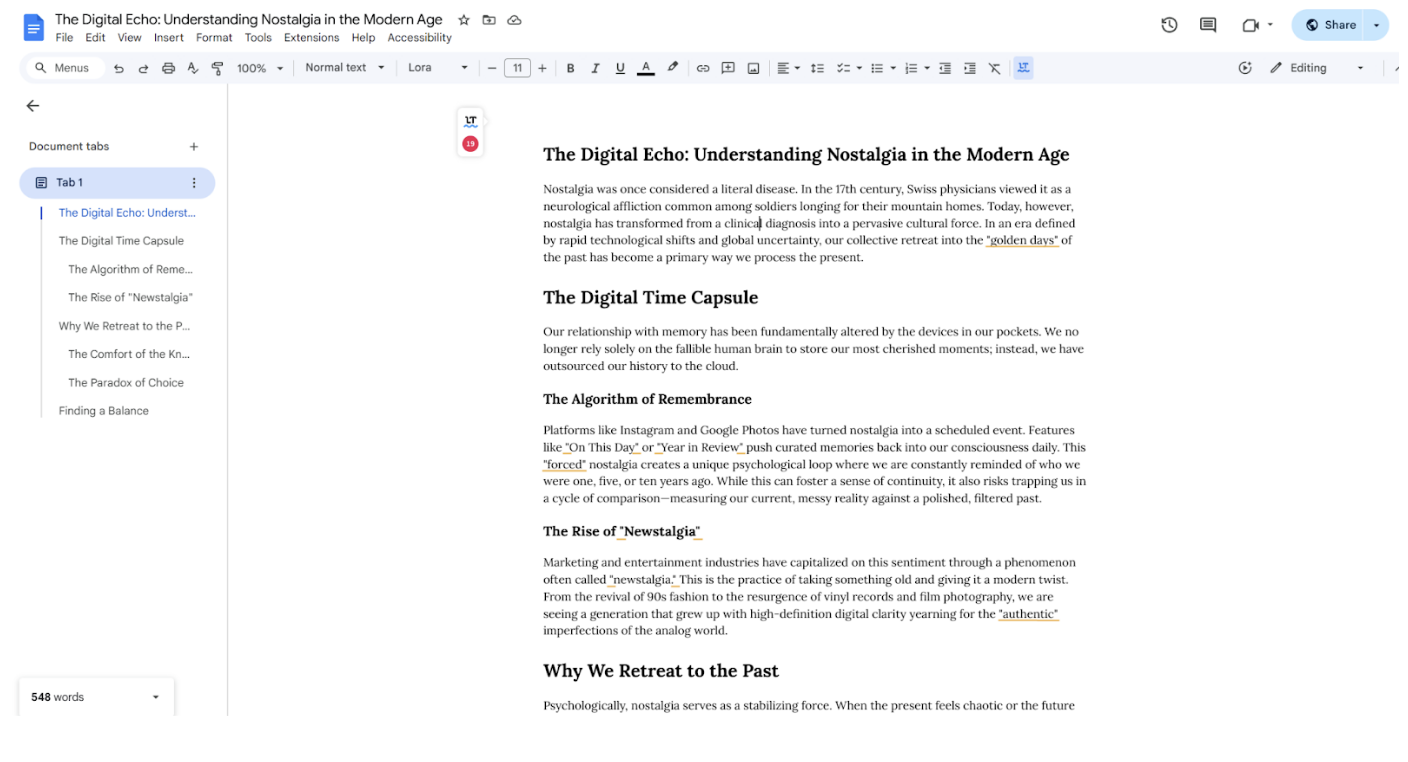
Baseline Results: Before TwainGPT
The detectors were in rare agreement on the original Gemini text.
GPTZero flagged the article as fully machine-written. It labeled the content “AI generated” with a breakdown of 90% AI, 10% mixed, 0% human.
ZeroGPT was even more aggressive. It returned 94.89% AI/GPT generated, with most of the article highlighted as artificial.
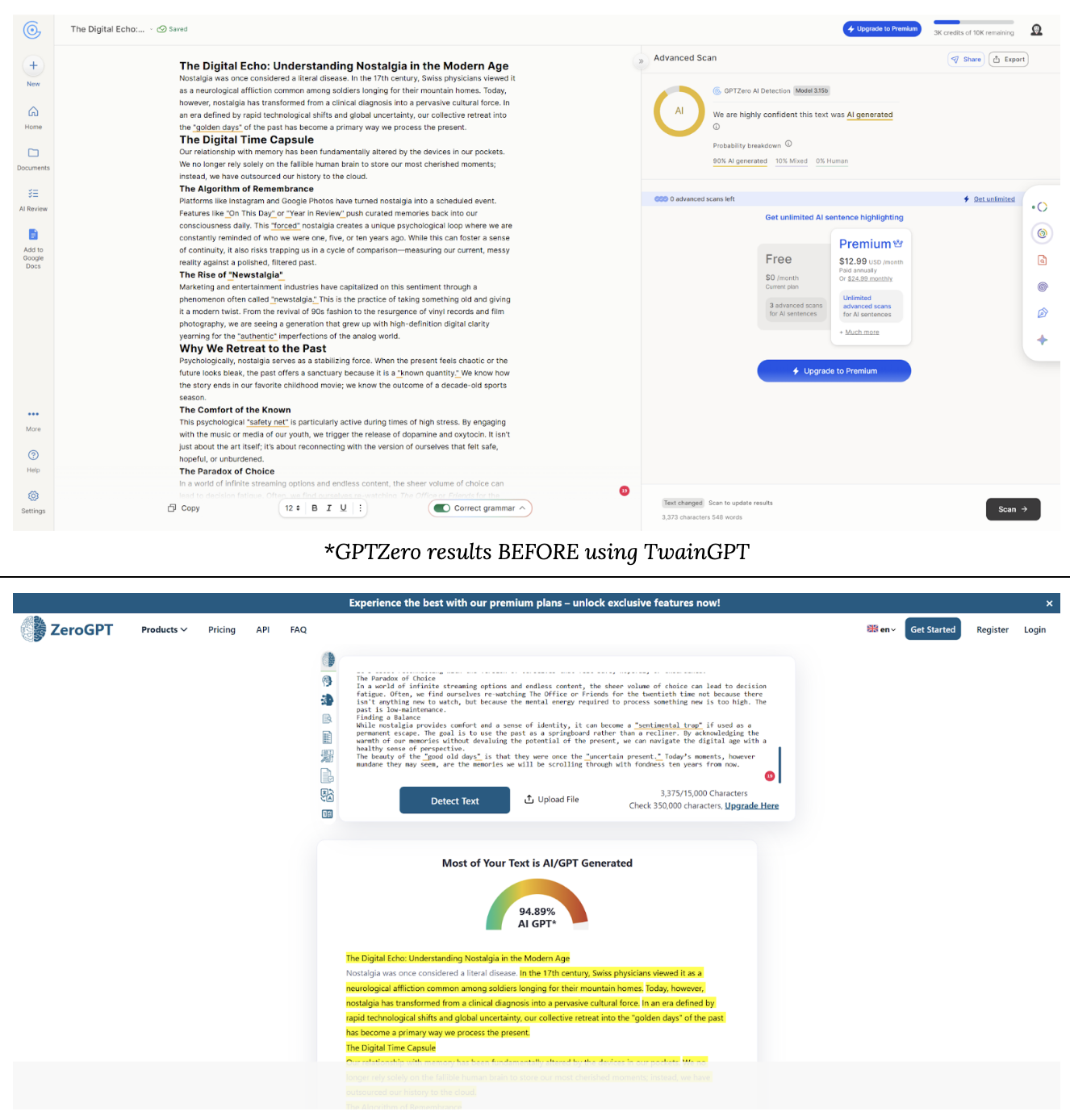
At this stage, the text is clearly dead on arrival for any environment that checks AI content.
TwainGPT Output Quality
After running the article through TwainGPT Humanizer, the wording changed subtly but not drastically. The core ideas stayed intact.
Examples of what changed:
Sentences were shortened.
Some phrasing became less formal.
Flow became slightly more conversational.
What did not change:
Meaning preservation was solid. The tool did not hallucinate facts, remove nuance, or distort claims. That alone puts TwainGPT above many low-grade rewriters that often flatten or misrepresent the source.
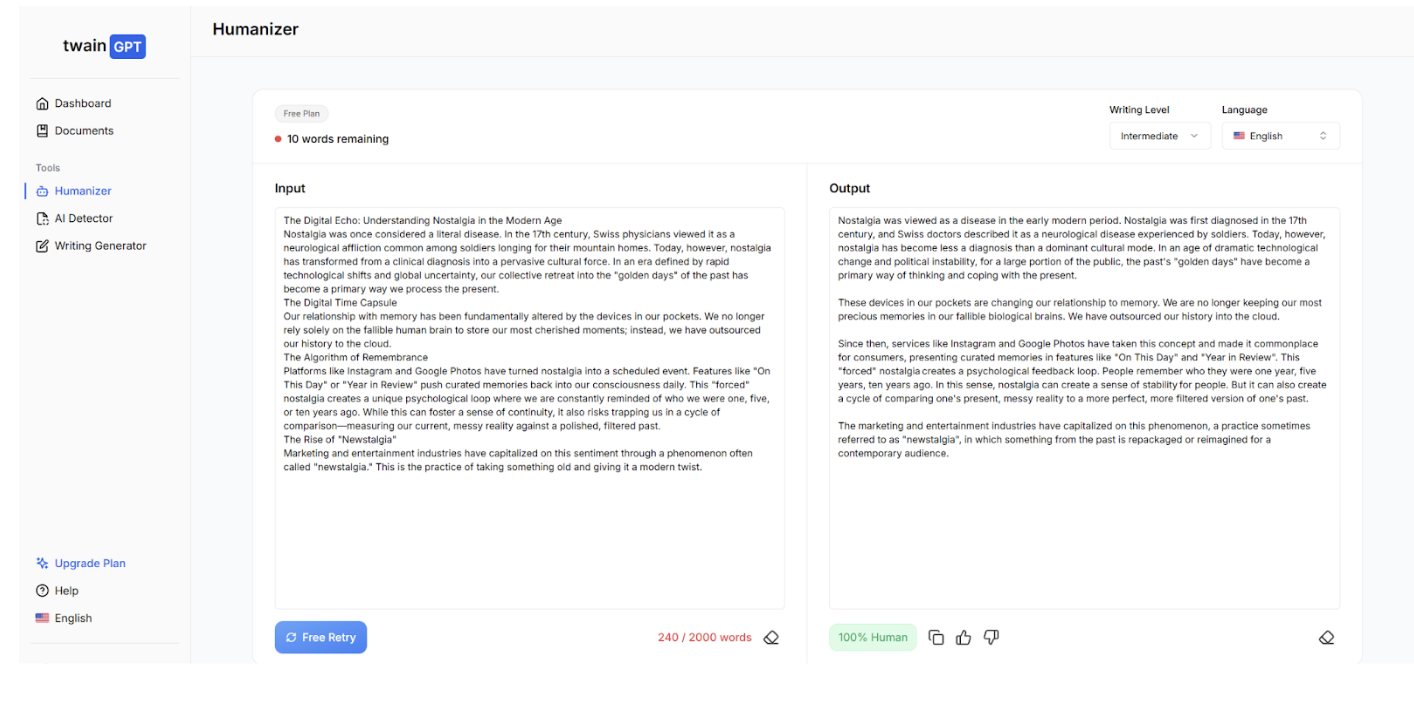
After Results: The Real Test
Now comes the interesting part.
ZeroGPT After TwainGPT
ZeroGPT flipped completely.
From 94.89% AI, the TwainGPT output was now labeled:
“Human written — 0% AI.”
No hedging. No mixed result. Full pass.
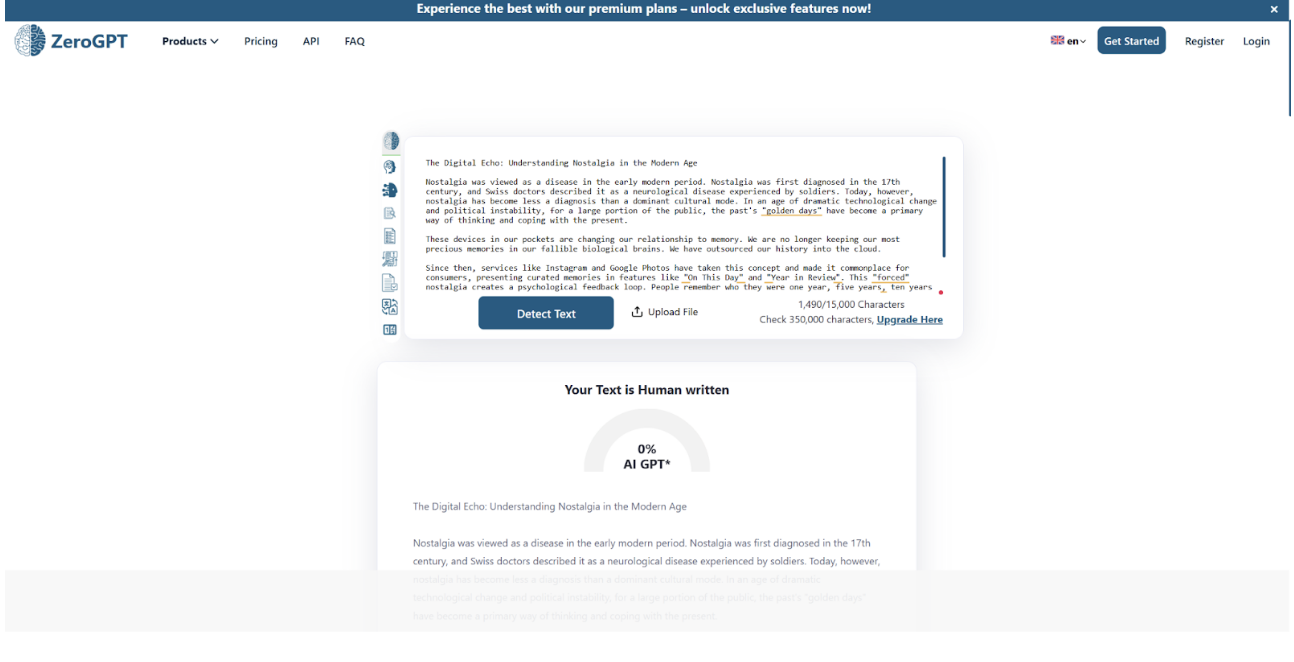
For users dealing with platforms that rely on ZeroGPT alone, this is a decisive win.
What stood out tho, that the results were not super reliable!
GPTZero After TwainGPT
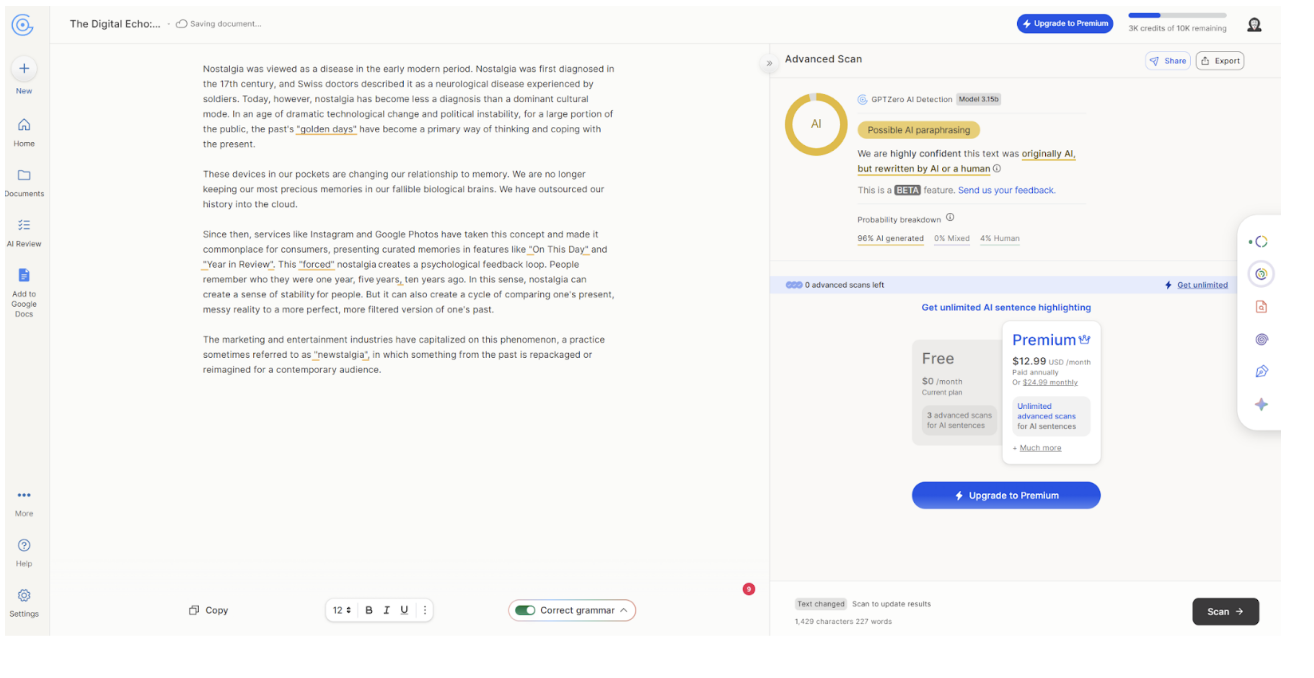
GPTZero did not agree.
Instead of classifying the text as human, GPTZero switched to a different label:
“Possible AI paraphrasing.”
It stated that it was highly confident the text was originally AI, but rewritten by AI or a human, with a probability breakdown showing 96% AI generated and 4% human.
In other words, TwainGPT changed GPTZero’s category, but not its conclusion.
What This Tells Us
TwainGPT is extremely effective at beating ZeroGPT’s surface-level heuristics. It changes sentence patterns, removes some statistical fingerprints, and lowers the repetitiveness that ZeroGPT punishes.
However, GPTZero is not looking only for surface smoothness. It tries to detect deeper characteristics such as structural predictability, phrasing entropy, and semantic compression patterns common in rewritten AI text.
That is why GPTZero still flags the content as machine-originated, even after humanization.
Pricing and Data Handling
TwainGPT currently operates on a word-based free plan with tight limits. Paid tiers unlock longer rewrites and batch processing.
You should verify whether the platform stores input text, because humanizers by design handle sensitive drafts. If the service logs content for model training, that creates privacy risks for client work, academic material, or proprietary content.
Final Verdict
TwainGPT does two things well.
First, it preserves meaning better than most humanizer tools. It does not butcher structure or tone.
Second, it beats ZeroGPT decisively.
Where it falls short is against GPTZero. It does not truly convert AI text into something that GPTZero sees as human. It merely changes the label from “AI generated” to “AI paraphrased.”
Our Humanizer is specialized to bypass GPTZero - with our V2 Model.
If your environment checks with only one detector, TwainGPT may feel like magic. If multiple detectors are in play, it becomes a cosmetic layer, not a disguise. Don't use it for academical stuff as Turnitin will catch you too!
Should You Use It?
Use TwainGPT if your goal is to smooth AI drafts and reduce obvious detection flags, especially in marketing or internal content workflows.
Do not use it as a shortcut to bypass academic integrity systems or editorial review. The detectors are not fooled at the deeper level, and they are improving faster than humanizers.